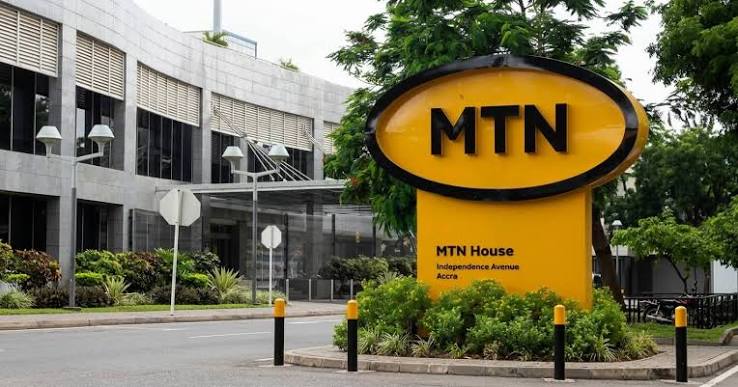
US$1.1 billion is a large number. But for the average Ghanaian mobile user, it means very little unless the internet becomes faster, calls become more reliable and network coverage improves.
That is the real question behind MTN Ghana’s latest infrastructure push.
MTN Group says it plans to invest US$1.1 billion in Ghana over three years to strengthen network infrastructure and improve service delivery. Read MTN Ghana’s investment announcement
The company says this is an acceleration from an earlier US$1 billion investment spread over five years.
More recently, MTN Ghana said approximately US$380 million is earmarked for 2026, with hundreds of new network sites planned as part of the expansion.
That sounds impressive.
But what exactly are Ghanaians supposed to get in return?
More sites should mean more capacity
One of MTN’s biggest priorities is expanding network capacity.
The company says it plans to deploy 500 new cell sites nationwide in 2026 as part of the current investment programme.
More sites can help in two ways.
First, they can expand coverage into places where signal is weak or unavailable.
Second, they can reduce congestion in areas where too many people are competing for capacity from the same infrastructure.
That matters in Accra, Kumasi and other busy urban areas where a phone may show a strong signal but internet performance still slows dramatically during peak periods.
Coverage bars do not always tell the whole story.
Sometimes the problem is capacity.
5G is now a major part of the investment
MTN has also secured new spectrum for 5G and mobile broadband.
In October, the company confirmed that the NCA had awarded it spectrum in the 700 MHz and 3 GHz bands.
The 700 MHz licences cost US$100.9 million, while the 3 GHz allocation cost US$101.1 million.
Together, the spectrum licences represent an investment of US$202 million. See MTN Ghana’s spectrum announcement
The two bands serve different purposes.
700 MHz can travel farther and penetrate buildings more effectively, making it useful for wider coverage.
3 GHz offers significantly more capacity, making it valuable in areas where demand for high-speed 5G is strongest.
MTN says it plans to use both to expand 5G mobility and home broadband.
But licences are not the same as better internet
This distinction matters.
Buying spectrum does not automatically improve someone’s connection.
The operator still needs:
- towers
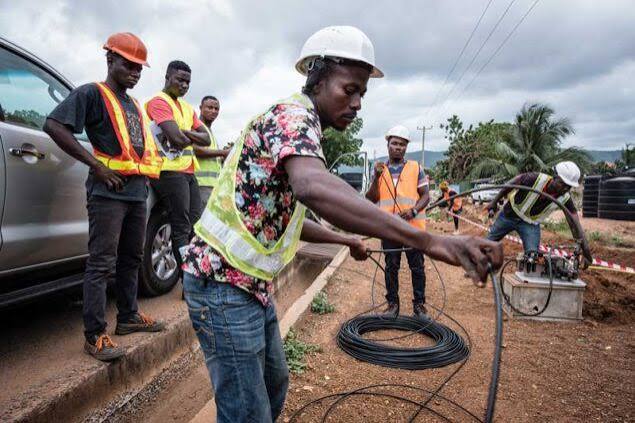
- fibre
- power
- radios
- network equipment
- technical staff
- reliable backhaul
And then customers need compatible devices.
That means the real impact of the US$202 million spectrum purchase will only appear as the infrastructure is deployed.
A licence is permission to build.
It is not the finished network.
So when MTN says it is investing billions, what should users actually measure: the money spent, or whether their internet gets better?
The second answer is more important.
Rural coverage will be one of the biggest tests
MTN has said network expansion will include communities outside Ghana’s largest cities.
That matters because rural and peri-urban connectivity remains one of Ghana’s biggest digital-infrastructure challenges.
A company can increase national data speeds while leaving large geographic gaps untouched.
The success of the investment will therefore depend partly on where the new sites are built.
If most new infrastructure goes into already well-connected urban areas, the digital divide may remain.
If investment extends reliable high-speed access into underserved communities, the effect becomes much more significant.
Home broadband is part of the strategy too
Mobile phones are not the only target.
MTN says its new spectrum will also strengthen its home broadband offering.
That is important because Ghana’s internet market is changing.
People increasingly need reliable home connections for:
- remote work
- streaming
- online education
- gaming
- cloud applications
- small businesses
Mobile data can handle many of those tasks.
But fixed or home broadband usually provides a more stable experience for heavy usage.
MTN appears to see 5G as another way of serving households that may not have fibre running directly to their homes.
Demand for data keeps growing
The investment also reflects how much Ghana’s telecom market has changed.
MTN says it now connects more than 32 million subscribers, while data and mobile financial services continue to expand.
Its mobile-money business is also processing significantly more activity.
The company reported a 44.4% year-on-year increase in MoMo transaction value during the first half of 2026, alongside growth in active users and transaction volumes.
That creates pressure on the wider network.
More smartphones.
More streaming.
More digital payments.
More cloud services.
More businesses online.
Infrastructure has to keep up.
Network resilience matters as much as speed
Recent fibre cuts in Ghana have shown another challenge.
Fast networks are useful only when they remain available.
MTN and other operators have experienced outages caused by damaged transmission fibre.
That means part of the US$1.1 billion investment should ultimately be judged on resilience too.
Does the network have enough backup routes?
Can traffic be redirected when fibre fails?
How quickly can services recover?
Ghana’s digital economy increasingly depends on telecom networks, so reliability is becoming just as important as download speed.
Competition will matter
MTN is not investing in isolation.
Ghana’s 5G market has become more competitive after the NCA removed the earlier wholesale exclusivity model and opened spectrum to multiple operators.
Telecel is also increasing network investment.
That could be good for users.
Competition can pressure operators to improve quality, expand coverage and introduce better pricing.
But competition only works if customers can actually feel the difference.
If every operator announces larger investments while users still complain about congestion and unreliable connections, the headlines will mean very little.
The real scoreboard is the customer experience
US$1.1 billion sounds impressive.
US$202 million for spectrum sounds impressive.
Hundreds of new sites sound impressive.
But those numbers are inputs.
The outputs are simpler.
Does your call drop less often?
Does your data connection stay fast at 7 p.m.?
Can someone outside Accra get reliable broadband?
Can households access 5G without buying extremely expensive devices?
And can the network survive fibre cuts and power problems without disappearing?
Those are the measures that matter.
MTN is making one of the largest telecom infrastructure commitments Ghana has seen in years.
Now the company has to turn that investment into something people can actually feel.
Because the best network investment is not the one with the biggest number. It is the one customers stop noticing because the network simply works.
Writer at TechNews.
Comments 0
No comments yet — start the conversation.