A WhatsApp voice note arrives in Twi.
It sounds convincing.
The speaker claims a major event has happened, names familiar places and uses expressions that feel local.
You want to verify it.
But most of the tools available to check misinformation work best in English.
That gap is exactly what a new Ghanaian AI project is trying to address.
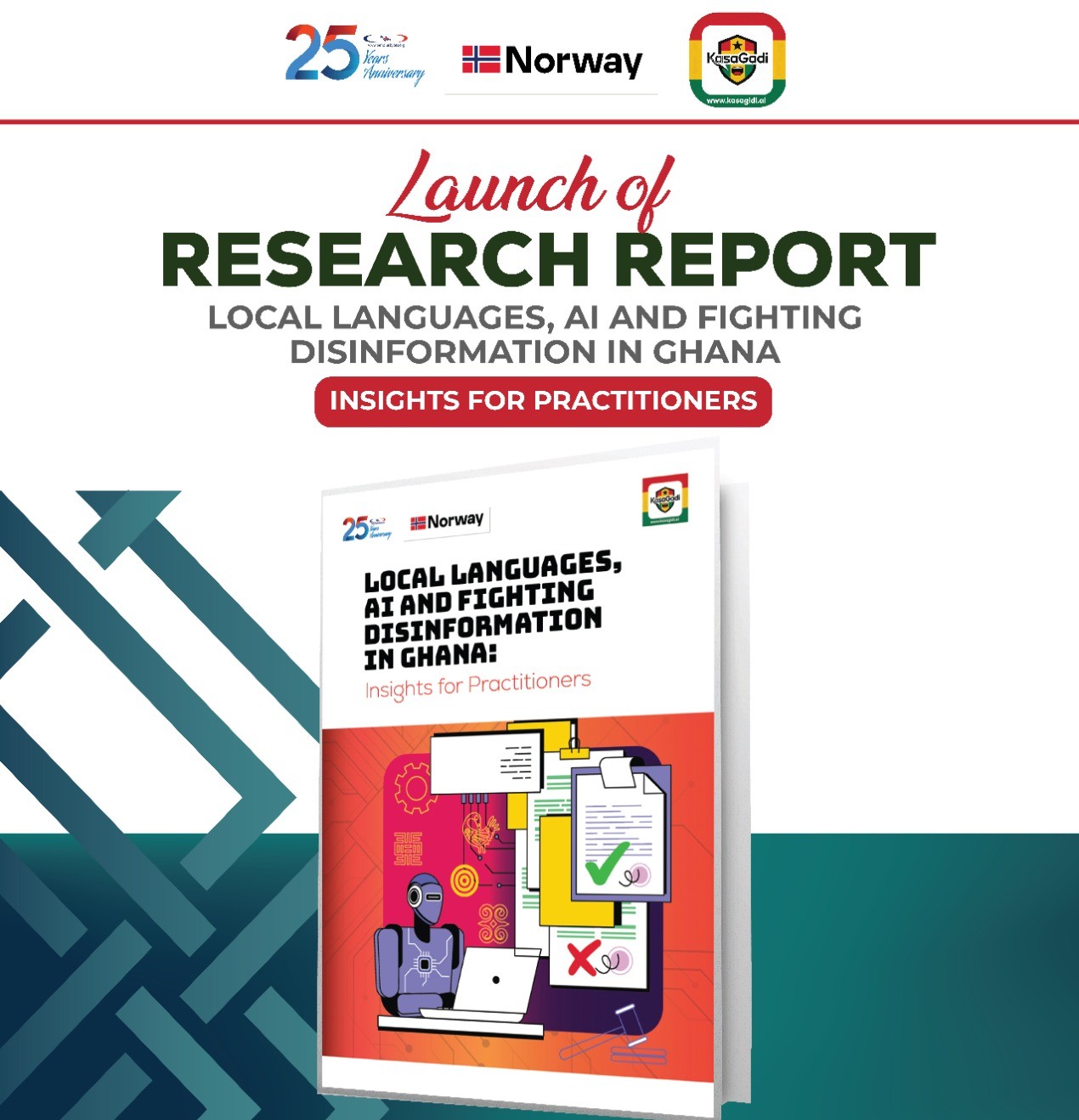
On October 15, Penplusbytes launched KasaGadi.ai, a multilingual AI-powered fact-checking platform designed to help detect and counter misinformation in Ghanaian local languages. Penplusbytes’ KasaGadi announcement
The platform is part of the Ghana Anti-Disinformation Coalition project and is intended especially for community and grassroots radio stations that serve audiences outside the country’s English-dominant information spaces.
The problem is not just fake news
Misinformation in Ghana does not move only through websites or social media posts.
It moves through WhatsApp groups.
Radio conversations.
Voice notes.
Community networks.
And local languages.
That is important because information often feels more trustworthy when it arrives in the language people use every day.
Penplusbytes surveyed 469 people across all 16 regions of Ghana as part of research into local languages and disinformation.
One of its most striking findings was that 7 out of 10 respondents agreed or strongly agreed that information delivered in a local language felt more credible, even when that information was false. Read the Penplusbytes research
That means language can become part of the trust problem.
A false claim does not necessarily need to look sophisticated.
It may simply need to sound familiar.
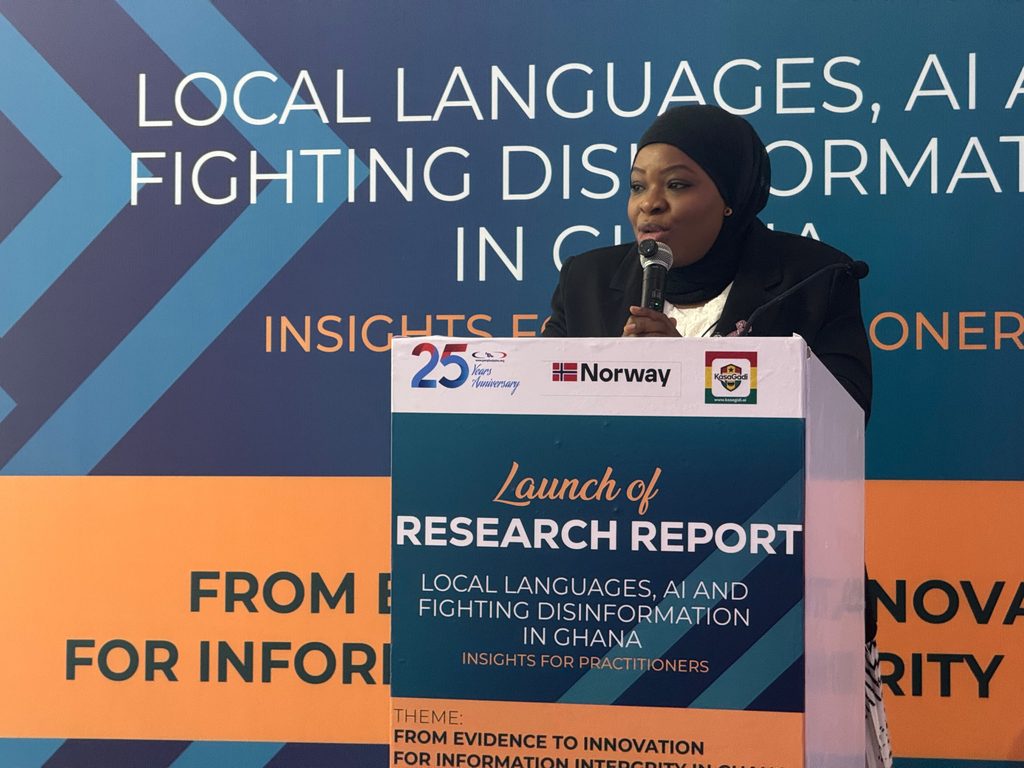
Ms Shamima Muslim, Deputy Presidential Spokesperson at the launch of the research report
Most AI tools still understand English better
Global AI tools have improved rapidly.
But many are still significantly stronger in English and other heavily digitised languages.
That creates problems in countries like Ghana, where everyday communication happens across Twi, Ga, Ewe, Dagbani and many other languages and dialects.
Penplusbytes says KasaGadi was designed partly because English-dominant verification tools do not always capture the linguistic and cultural nuances of Ghanaian misinformation.
The platform is meant to support verification, content analysis and fact-checking using locally relevant language data.
That is a much harder problem than simply translating English into Twi.
A system needs to understand context.
Slang.
Expressions.
Tone.
And sometimes the difference between what someone literally says and what they actually mean.
Can AI really understand misinformation if it does not understand the culture in which that misinformation is spreading?
That is what makes KasaGadi interesting.
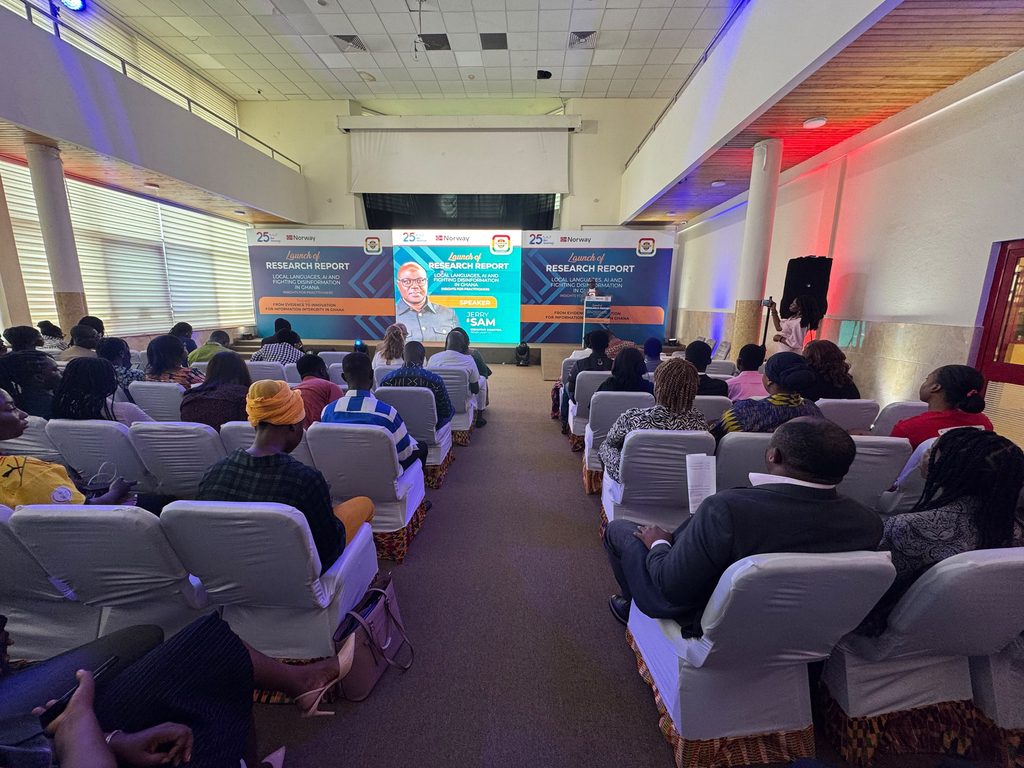
Community radio could be where this matters most
One of the smartest parts of the project is its focus on community and grassroots radio.
In many parts of Ghana, radio remains an important source of information, particularly outside major urban areas.
Penplusbytes says KasaGadi will make verified content available to community stations in languages their listeners understand.
That means the platform is not only trying to identify false information online.
It is also trying to help trusted local institutions respond to it.
A presenter could potentially verify a claim before repeating it on air.
A community station could access fact-checked information in a local language.
And journalists could have another tool for checking claims that do not originate in English.
That is where the technology becomes practical.
But AI should not become the final judge of truth
There is also a risk.
AI systems can make mistakes.
They can misunderstand context.
And an automated system deciding that information is “false” could become dangerous if there is no human oversight.
Penplusbytes says claims on KasaGadi are independently verified before publication, rather than relying entirely on automated AI decisions.
That distinction matters.
AI can assist with detection and analysis.
But journalism, fact-checking and public information still require human judgement.
Especially when politics, public health or community tensions are involved.
Ghana’s local-language AI story is getting bigger
KasaGadi also fits into a much broader question around Ghana’s AI development.
Much of the global AI industry is built around datasets from elsewhere.
If Ghana wants AI that understands Ghanaian users, it will need locally relevant data and language resources.
That applies beyond misinformation.
The same problem appears in customer service, healthcare, education, banking and public services.
An AI assistant designed for Ghana may need to understand how people switch between English and local languages in the same conversation.
It may need to recognise local names and accents.
And it may need to understand expressions that make little sense outside Ghana.
KasaGadi is one example of what happens when AI development starts with those realities instead of treating them as an afterthought.
The real test comes after launch
Launching the platform is only the beginning.
The harder questions are adoption and accuracy.
Will journalists actually use it?
Will community radio stations trust it?
How many Ghanaian languages will it support well?
How quickly can it respond when false information spreads?
And how will the platform avoid becoming another useful project that disappears once the initial funding cycle ends?
Those questions will determine its impact.
But the larger idea is important.
Ghana does not only need AI tools built for global users.
It also needs technology that understands how Ghanaians actually communicate.
Because if misinformation speaks local languages, the tools fighting it probably need to speak them too.
Writer at TechNews.

Comments 0
No comments yet — start the conversation.