
A designer in Accra can spend months learning UI/UX, branding, product design or motion graphics online.
But knowing the tools is only part of the job.
The bigger challenge is learning how to turn those skills into work that people use, businesses pay for and industries value.
That is where dEX Design Conference 2026 comes in.
From November 12 to 14, designers, founders, educators, policymakers and creative professionals will gather at the National Theatre in Accra for three days focused on the theme “Sustainable Design for People, Planet & Profit.”
According to the official dEX Design Conference website, the event is expected to attract more than 1,500 attendees and over 30 speakers, with sessions spanning product design, UX/UI, branding, architecture, game design, photography, film, creative business and emerging technology.
At first glance, that may sound like a conference mainly for creatives.
It is.
But it is also increasingly a technology story.
Design is becoming part of the tech stack
For years, technology conversations in Ghana have focused heavily on developers, startups, fintech and infrastructure.
Design often came later.
Build the product first.
Make it look better afterward.
That mindset is changing.
Good design now affects whether someone understands a financial app, whether a government website is usable, whether an AI product feels trustworthy and whether a startup can keep users after they sign up.
In other words, design is no longer just about how technology looks.
It is increasingly about how technology works for people.
That is reflected in the dEX 2026 programme, which includes discussions around AI workflows, product design, user engagement, creative entrepreneurship, sustainability and the commercial value of design.
One scheduled masterclass focuses on AI workflows for business success, while another looks at how organisations can use design as a competitive advantage.
That combination matters.
The line between designer and technologist is becoming much less clear.
The conference is built around three ideas
The 2026 edition is structured around three themes:
People. Planet. Profit.
According to the conference organisers, each day explores a different part of that theme.
The first focuses on people, including equity, dignity and representation.
The second looks at sustainability and environmental responsibility.
The final day moves toward business, commercial value and long-term growth.
That structure pushes the conversation beyond aesthetics.
A product can look attractive and still be difficult to use.
A digital platform can scale and still exclude the people it was supposed to serve.
A business can grow while creating unnecessary environmental or social costs.
That leads to an important question:
Should good design be judged only by how something looks, or by whether it actually improves the experience of the people using it?
dEX appears to be pushing the second view.

AI is changing the creative industry too
Artificial intelligence is impossible to ignore in today’s design industry.
AI tools can now generate images, suggest layouts, build websites, write copy, create prototypes and help designers test ideas much faster than before.
The dEX Ghana platform has already explored how AI is reshaping design tools, workflows and creative careers.
For young Ghanaian creatives, that creates both opportunity and pressure.
Some tasks that once took hours can now be completed in minutes.
But faster tools do not automatically produce better design.
A designer may still need to understand users, culture, accessibility, business goals and context.
That may actually make human judgement more valuable.
The designer who only knows how to operate software may increasingly compete with AI.
The designer who understands why a product should work a certain way may become much harder to replace.
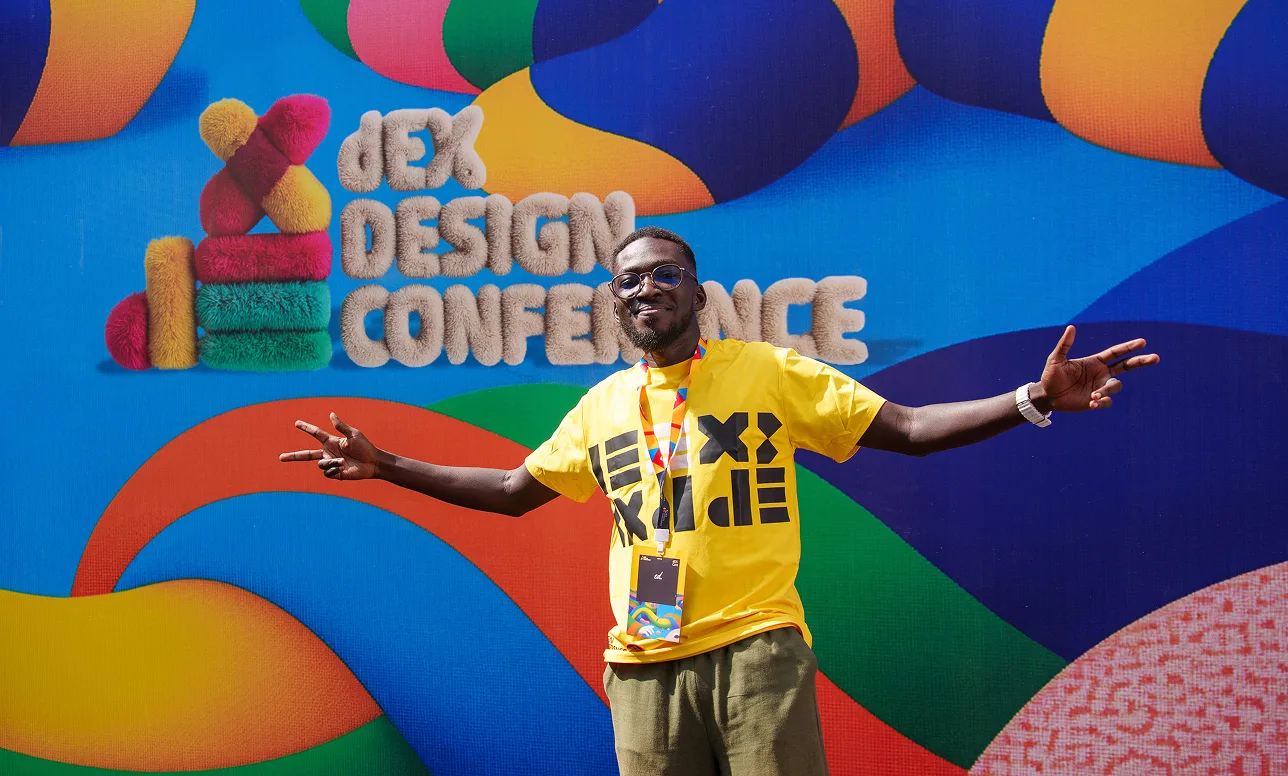
dEX Design Conference 2025
Ghana’s creative-tech economy is getting more organised
dEX is also doing more than hosting an annual conference.
The organisation says its wider work includes education, research, community building and design advocacy in Ghana.
One particularly interesting initiative is dEX Count, described by the organisation as Ghana’s National Design Census. The goal is to better understand the people working across areas such as graphic design, architecture, UX and other creative disciplines. You can read more about its programmes through dEX Ghana.
Why does that matter?
Because one challenge facing creative industries is a lack of reliable data.
How many designers work professionally in Ghana?
Which sectors employ them?
What skills are companies struggling to find?
Where are the biggest opportunities?
Without that information, it is difficult for policymakers, schools and investors to properly understand the economic size of the sector.
A stronger picture of Ghana’s design workforce could eventually help identify skills gaps and investment opportunities.
dEX is bringing more than designers into the room
The 2026 conference is also widening its audience.
According to the organisers, the event is targeting not only professional designers but also students, universities, businesses, NGOs, government institutions and policymakers.
That is important because design problems rarely belong to one profession.
A fintech company may need a UX designer to simplify payments.
A government agency may need someone to redesign a confusing public service.
A hospital may need a better digital patient experience.
A startup may have brilliant technology but struggle because customers cannot understand how to use it.
Bringing designers, technologists and business leaders into the same room could help move design closer to the beginning of product development rather than treating it as decoration at the end.
There is also a career question
For students and early-career creatives, learning the skill is often only the first challenge.
The second is access.
Access to mentors.
Access to employers.
Access to feedback.
Access to professionals already doing the work.
The DDC26 programme includes portfolio reviews, mentorship opportunities, workshops, masterclasses and networking sessions.
That could be especially valuable for younger designers trying to understand what the industry expects.
Because inspiration alone does not build a career.
People also need practical feedback and connections.
And that creates another question worth asking:
Should conferences like dEX be measured by attendance numbers, or by how many careers, businesses and collaborations continue after the event ends?
The second measurement may ultimately matter more.

dEx Design Conference 2025
Why dEX matters now
Ghana’s technology ecosystem is changing.
Fintech remains important.
AI is expanding.
5G infrastructure is developing.
Digital public services are becoming more common.
But none of those technologies succeed simply because the technology exists.
Someone has to decide how people interact with it.
How understandable it is.
How inclusive it is.
Whether it solves the right problem.
And whether users actually want to return.
That is where design becomes part of the technology conversation.
dEX 2026 may officially be a design conference, but the bigger story is about how Ghana builds digital products, businesses and experiences.
Ghana already has developers.
It has founders.
It has designers and creatives.
The opportunity now is getting those groups to build together.
And that collaboration could shape some of the country’s most interesting technology products in the years ahead.
Writer at TechNews.



Comments 0
No comments yet — start the conversation.