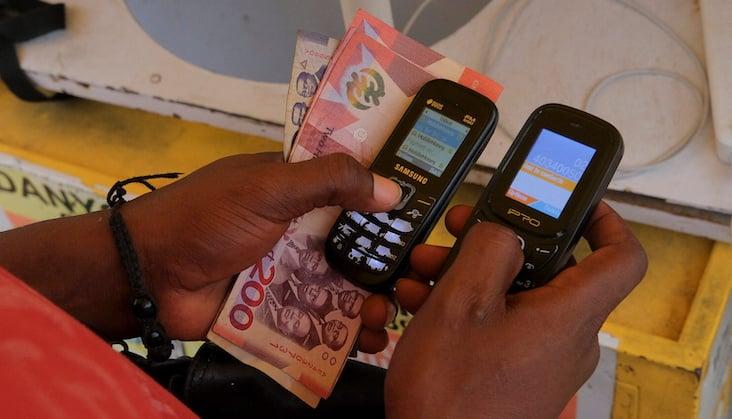
Fintech has become one of Africa’s biggest technology stories because it solved a problem millions of people already had: moving, receiving and accessing money was often slow, expensive or inconvenient.
Today, mobile money, digital banks, payment apps and fintech infrastructure are changing how Africans interact with money.
In 2025, fintech startups attracted about $1.49 billion, or 37% of all technology funding in Africa, according to Partech’s 2025 Africa Tech Venture Capital Report. That made fintech the continent’s largest funded technology sector.
But Africa does not have one fintech story. Ghana, Kenya, Nigeria and South Africa are developing in different ways.
Ghana: Mobile money becomes infrastructure
Ghana shows how quickly digital finance can move from convenience to essential infrastructure.
According to the Bank of Ghana’s 2025 Payment Systems Oversight Annual Report, the country ended 2025 with 80.5 million registered mobile-money accounts and 26.6 million active accounts.
Ghanaians completed 9.70 billion mobile-money transactions worth GH¢4.54 trillion during the year. One person can own more than one account, so the registration figure does not represent 80 million individual users.
People now use mobile money for much more than sending cash to friends and family. It is used for merchant payments, bills, airtime and transfers between wallets and banks.
Ghana’s wider fintech ecosystem is expanding too. The Bank of Ghana says the number of licensed Payment Service Providers increased from 57 in 2024 to 64 in 2025.
The question now is no longer whether Ghanaians will use digital payments, but what financial services will be built on top of them.
Kenya: The mobile-money pioneer
Kenya remains one of Africa’s best-known mobile-money markets.
Its fintech story was shaped heavily by services such as M-Pesa, which helped demonstrate that a mobile phone could become a financial tool even without a traditional bank account.
The Central Bank of Kenya reported 78.4 million mobile subscriptions by the end of 2025, while mobile financial services remained a major part of the country’s financial system.
Kenya’s fintech sector is now moving beyond basic transfers into digital credit, merchant payments and other financial services.
Nigeria: Building a much bigger payments ecosystem
Nigeria’s story is different again.
Its huge population and competitive banking and technology sectors have created a market for digital banks, payment processors, agent banking and fintech companies such as OPay, PalmPay, Paystack and Flutterwave.
The Central Bank of Nigeria licenses fintech businesses across categories including mobile-money operators, switching companies and payment-solution providers.
Nigeria is also trying to modernise the system itself.
Its Payments System Vision 2028, launched in June 2026, focuses on interoperability, security, financial inclusion, innovation and stronger links between Nigeria’s payment infrastructure and regional markets.
That means Nigeria’s next fintech phase may be less about creating another payments app and more about improving the infrastructure underneath those apps.
South Africa: Fintech meets traditional finance
South Africa brings another model.
Unlike markets where mobile money became the main route into digital finance, South Africa already has a large formal banking and financial-services industry.
Fintech companies are therefore increasingly competing with—or working alongside—established financial institutions.
Regulators are also creating controlled environments for new products. South Africa’s Financial Sector Conduct Authority operates a regulatory sandbox and fintech innovation programme intended to allow new financial technologies to be tested while managing consumer and financial-system risks.
Fintech is moving beyond payments
Across these markets, the industry is entering a new stage.
The first wave solved basic problems such as sending and receiving money.
The next wave is moving into digital lending, remittances, merchant services, cross-border payments, fraud detection and financial APIs.
Some of the most important fintech companies may therefore become businesses most consumers never see.
They will provide the technology connecting banks, wallets, merchants and payment systems behind the scenes.
If fintech has already made it easier to move money within individual African countries, can the next phase make cross-border payments just as simple?
Africa’s next fintech challenge
One major problem is still unresolved: moving money easily between African countries.
Sending money within Ghana or Nigeria can be straightforward.
Sending that same money across borders can involve different currencies, regulations and payment systems.
That makes cross-border payments one of the continent’s biggest fintech opportunities.
Fintech has already changed how millions of Africans access money.
The next stage is about connecting those systems.
And that could be where Africa’s fintech story becomes even more interesting.
Writer at TechNews.



Comments 0
No comments yet — start the conversation.