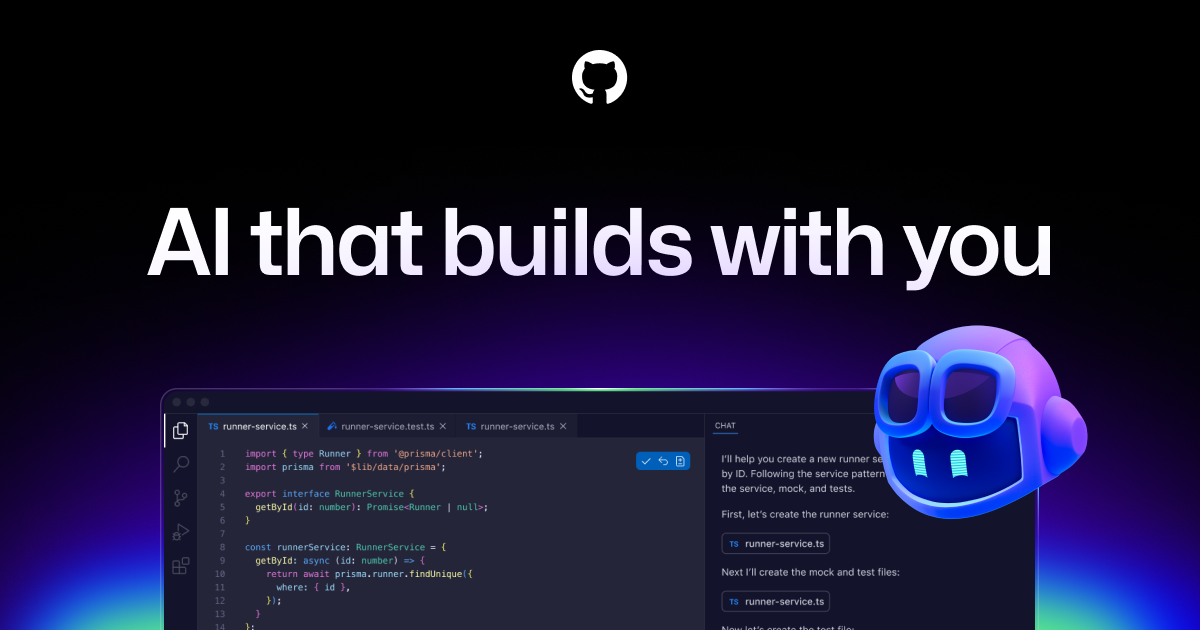
GitHub Copilot started as a tool that suggested the next few lines of code.
It is becoming something much bigger.
Over the past few days, GitHub has rolled out a series of updates that show where software development is heading: AI that can review code, run commands, work inside repositories and increasingly handle entire development tasks.
The biggest change may not be that Copilot can write more code.
It is that GitHub is giving it more freedom to act.
Copilot can now work inside a sandbox
On September 23, GitHub introduced local sandboxing in the GitHub Copilot app.
That sounds like a technical feature, but it solves a very real problem.
Once an AI coding agent can run terminal commands, modify files and access network resources, developers need a way to limit what it can touch.
GitHub’s sandbox lets developers control which folders Copilot can read or write, whether it can connect to the internet and which credentials it can access.
If a computer cannot enforce those restrictions, GitHub says the sandboxed session will fail rather than run without protection.
That tells us something important about where coding assistants are going.
They are no longer simply suggesting code.
They are being trusted to perform actions.
AI is moving into code review too
Writing code is only part of software engineering.
Someone also has to review it.
GitHub has been expanding Copilot code review, allowing the AI to examine pull requests, identify possible issues and track whether developers have fixed its recommendations.
The latest version groups findings into open and resolved issues and assigns severity levels to problems it detects.
GitHub has also removed previous limits that prevented Copilot from reviewing some very large pull requests.
That means AI is increasingly appearing on both sides of the development process.
It can help create the code.
Then another AI-powered workflow can review it.
Developers now get to choose the AI
Another major change happened on September 22.
GitHub added OpenAI’s GPT-6 Sol and GPT-6 Luna to Copilot.
Claude Opus 5.5 and Grok 4.7 were also added to the platform around the same period.
Instead of Copilot being tied to one AI model, developers increasingly have a model picker.
A programmer might choose one model for a difficult multi-step coding task and another for a quick fix where speed and cost matter more.
That changes the competition.
Developers may care less about which AI company “wins” overall and more about which model works best for the task in front of them.
Enterprises are preparing for AI everywhere
GitHub is also changing how organisations manage these tools.
On September 24, the company introduced a new default policy for Copilot features.
From October 22, companies using Copilot Business or Enterprise will be able to choose whether eligible new Copilot features are automatically enabled, disabled or left to individual organisations to decide.
It may sound like an administrative update.
But it reflects a larger shift.
AI coding tools are moving from experimental developer add-ons into tools that companies now need formal policies to manage.
Security, data access and governance are becoming just as important as how good the AI is at writing code.
What happens to the software engineer?
This is the question hanging over almost every new AI coding tool.
If Copilot can write code, run commands, review pull requests and operate inside a repository, what is left for the developer?
For now, quite a lot.
AI-generated code still needs human judgement.
Developers must decide what should be built, how systems should fit together, which trade-offs are acceptable and whether the software is secure enough to reach users.
The job may be shifting from writing every line manually toward directing, checking and coordinating AI systems.
That could eventually make software engineers more productive.
It could also raise the bar.
A developer who once spent hours writing repetitive code may increasingly be expected to manage several AI agents at once and deliver more in the same amount of time.
Software engineering is becoming agentic
GitHub itself describes Copilot as moving beyond the traditional assistant model.
The company has said its sandboxing work is designed for agentic development — a model where AI systems can execute tools, change files and work through tasks rather than simply answer questions.
That may be the bigger story behind all these updates.
The next generation of software development may not be a person sitting beside an AI autocomplete tool.
It could be a developer supervising several AI agents, each writing, testing and reviewing different parts of the same product.
The engineer is still there.
But the way software gets built is starting to look very different.
Writer at TechNews.



Comments 0
No comments yet — start the conversation.